
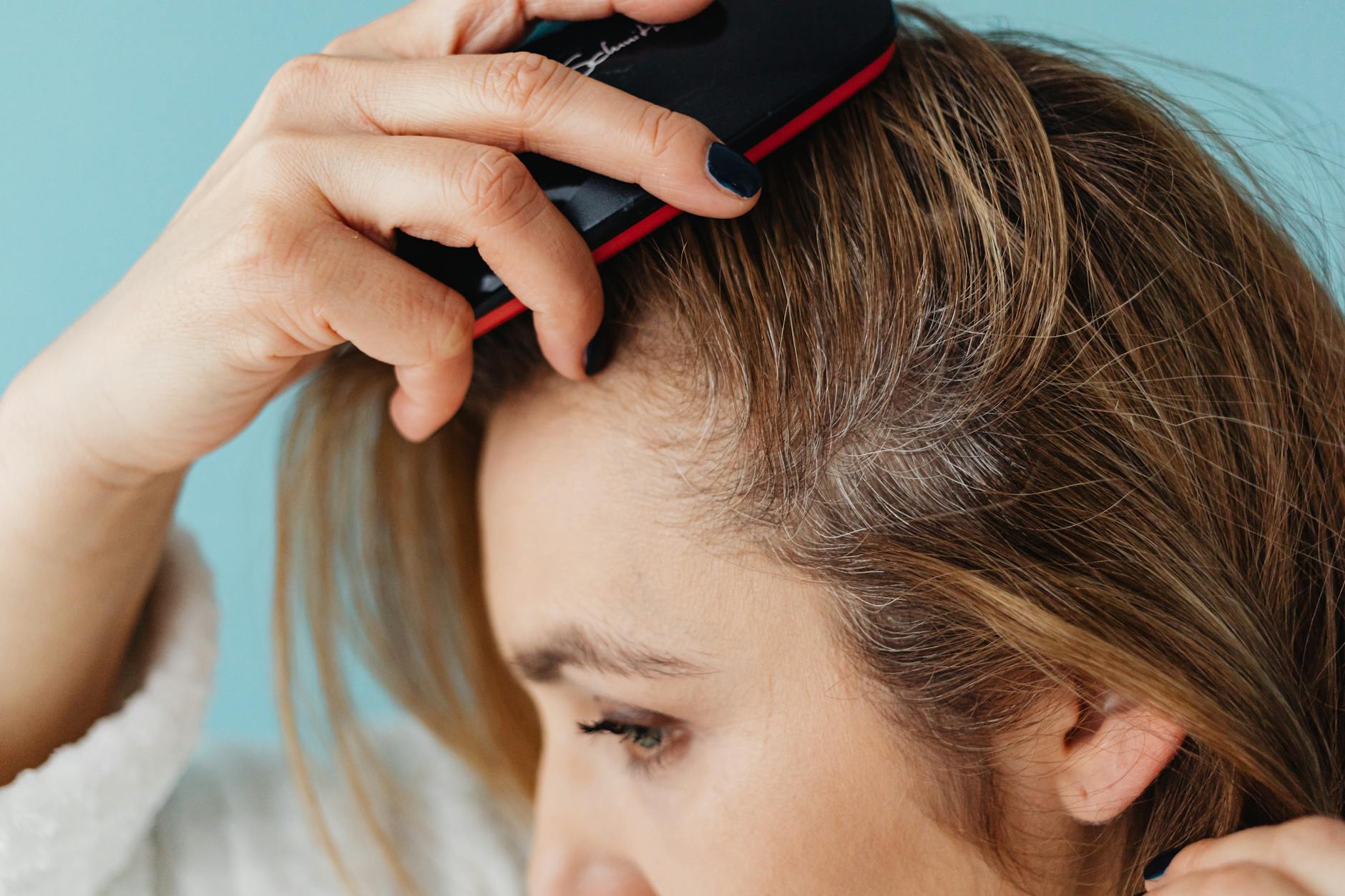
If your hair turns limp and greasy by lunchtime — especially in Singapore’s humid weather — you’ve probably heard of the viral “scalp training” hack. The idea? Wash your hair less so your scalp “learns” to produce less oil.
Sounds tempting, right? But can you really train your scalp like a gym muscle? Let’s separate the science from the myth.
First, Why Does Your Scalp Get Oily?
Your scalp naturally produces sebum, an oil that protects and moisturises both skin and hair. But when sebaceous glands go into overdrive, you get that greasy-by-2 p.m. look.
Common culprits include:
- Singapore’s heat and humidity (hello, constant sweating)
- Overwashing, which strips oils and makes your scalp overcompensate
- Hormonal fluctuations, especially around your 20s–30s
- Stress, which spikes cortisol and stimulates oil glands
- Heavy products like serums or oils that clog follicles
Can You Actually “Train” Your Scalp?
Short answer: not really.
Your scalp doesn’t learn or adapt its oil production based on your habits. However, what you can do is rebalance it through consistent care — so it behaves like a healthier scalp.
Here’s how that works.
What Actually Helps Control Oil (Backed by Science)
1. Gentle, Consistent Cleansing
Skipping washes completely traps sweat and bacteria, worsening buildup. Instead, wash every 1–2 days with a mild, sulfate-free shampoo to remove excess oil without stripping.
2. Exfoliate Weekly
Scalp exfoliation clears sebum plugs and dead skin cells, preventing overproduction. Look for ingredients like salicylic acid or natural fruit enzymes.
3. Balance with Lightweight Hydration
Dehydrated scalps can produce more oil to compensate. Use lightweight conditioners or scalp tonics that hydrate without clogging pores.
4. Avoid Heat Styling & Heavy Oils
Heat and occlusive products can irritate oil glands. Let hair air-dry when possible and avoid layering too many products.
5. Manage Stress
Mind-body balance matters — chronic stress stimulates oil glands. Try yoga, exercise, or mindful breaks (yes, even scrolling less helps).
Signs Your Scalp Is Rebalancing
- Hair stays fresher for longer between washes
- Less itchiness or buildup around the crown
- Softer, more manageable texture
- Reduced “wet look” roots by midday
Just remember: this isn’t “training” — it’s maintenance. A balanced scalp takes time and consistency, not deprivation.
Final Takeaway
You can’t train your scalp to stop producing oil — but you can create the right environment for balance. With gentle cleansing, smart hydration, and scalp-friendly habits, oily hair days will become less frequent.
So instead of skipping shampoo for a week (and suffering through the grease), try consistency — it’s the real secret to a calm, balanced scalp.
Leave a Reply