
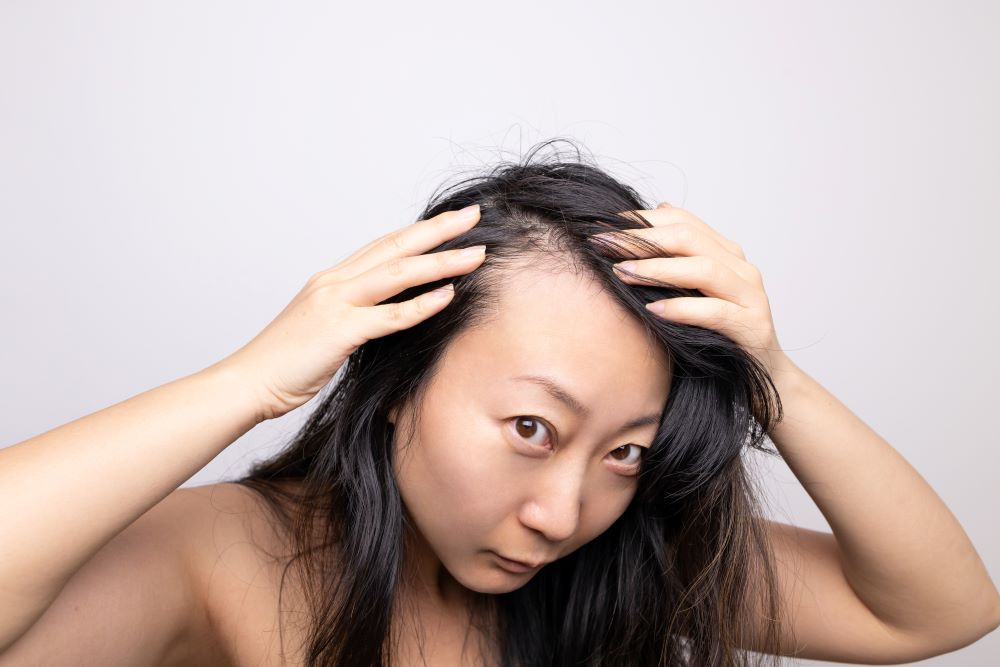
In Singapore, many find themselves juggling demanding careers, family life, and social commitments. Amidst this whirlwind, convenience often dictates our hairstyle choices. But did you know that those sleek ponytails, elegant buns, and tight hairstyles could be silently causing hair loss?
Let’s learn more about the often-overlooked condition of traction alopecia and learn how to protect your precious locks.
What is Traction Alopecia?
Traction alopecia is a form of hair loss caused by prolonged or repetitive tension on the hair follicles. While men and women can experience it, the condition is more common amongst women due to the popularity of certain hairstyles amongst the latter.
Sleek ponytails, elegant buns, and elaborate braids, for instance, while looking good, can cause chronic pulling on the hair that gradually weakens the hair follicles, leading to breakage, thinning, and eventually, permanent hair loss. Essentially, the constant pulling disrupts the natural hair growth cycle, causing damage and inflammation within the follicle.
Stages of Traction Alopecia
Traction alopecia typically progresses through several stages:
- Early Stage: You might notice small bumps or pustules around the hairline or areas of tension. There may be mild redness and tenderness, accompanied by increased hair shedding. This is often when people first start asking, “How much hair drop is normal?” because they’re noticing more hair fall than usual, especially during showering or brushing.
- Progressive Stage: Hair loss becomes more noticeable, with thinning and widening of the part. Broken hairs and a receding hairline, particularly around the forehead, may become apparent.
- Advanced Stage: Scarring can occur, leading to signs of permanent traction alopecia. In these cases, hair follicles are irreparably damaged, and hair regrowth becomes difficult or impossible.
Recognising the Signs of Traction Alopecia
Traction alopecia can be subtle at first, but it’s crucial to identify symptoms early to prevent further damage. Common signs include:
- Small bumps or pustules on the scalp
- Redness and tenderness in the affected areas
- Itching and a feeling of tightness
- Thinning hair or a widening part
- Broken hairs around the hairline
- Receding hairline, especially at the temples and forehead
If you notice any of these signs, it’s important to consult a hair loss specialist to determine if you have traction alopecia and discuss appropriate treatment options.
Who is at Risk for Traction Alopecia?

While anyone who frequently wears tight hairstyles is at risk, certain practices can increase the likelihood of developing traction alopecia, including:
- Frequent use of hair extensions, especially those tightly woven or glued in.
- Frequently wearing tightly pulled hairstyles for work or special occasions (professions such as dancers, athletes, or actors may be more vulnerable in this respect).
- Frequent chemical treatments like rebonding or perming, coupled with the use of heat styling tools, can weaken hair and make it more susceptible to damage.
- Having finer or more fragile hair.
Prevention and Treatment for Traction Alopecia
Prevention is key when it comes to traction alopecia. Here are some tips to avoid hair loss due to tight hairstyles:
- Opt for looser hairstyles that don’t put excessive tension on the hair follicles.
- Avoid wearing tight braids, ponytails, or buns for extended periods.
- Choose hair accessories that don’t pull or snag the hair.
- If you use hair extensions, ensure they are installed and maintained properly by a qualified professional, and take occasional breaks to minimise stress on your follicles.
If you’re already experiencing traction alopecia, there are various treatment options available. This includes lifestyle changes, medications to promote hair growth, and hair fall treatments in Singapore like Low-Level Laser Therapy (LLLT).
At V Aesthetics Hair Grow, we offer a range of hair fall and hair care treatments backed by science, including female hair loss treatments in Singapore. Our experienced specialists can assess your condition, identify the underlying causes, and recommend a personalised treatment plan to help you restore your hair and scalp health.
Contact us today to find out more and take the first step towards regaining your hair density and confidence.
Leave a Reply