

Treatment for Female Hair Loss in Singapore
Hair loss can be a deeply personal and challenging experience for women, impacting not just their physical appearance but also their emotional well-being and self-confidence.
At V Aesthetics Hair Grow, we recognise the unique nature of female hair loss and the profound effect it can have on a woman’s life, and we are committed to providing treatments designed to address female hair loss and foster healthy, natural regrowth.
Table of Contents
- Understanding Female Hair Loss
- What Causes Hair Loss in Women?
- Signs of Hair Loss in Women
- The Ludwig Scale Explained
- Female Hair Loss Treatment Options in Singapore
- How V Magic Hair Grow Works
- Female Hair Loss Treatment Cost in Singapore
- Why Choose V Aesthetics Hair Grow for Female Hair Loss Treatment?
- Frequently Asked Questions About Female Hair Loss Treatment
- Transparent Pricing, Personalised for You
- Price From $28 Nett.
- Related Treatments
Understanding Female Hair Loss
Female hair loss, often characterised by diffuse thinning across the scalp, can be a source of significant anxiety and emotional distress. It often begins subtly, typically starting in the 30s or 40s and potentially worsening after menopause. A local 2024 study reported that the most common cause of alopecia (the medical term for hair loss) was female pattern hair loss (71%).
Unlike male pattern baldness, which typically presents as a receding hairline or bald patches, female hair loss tends to be more widespread, leading to a noticeable decrease in overall hair volume. This can significantly impact a woman’s self-esteem and quality of life.
What Causes Hair Loss in Women?
Female hair loss can stem from various factors, ranging from genetic predisposition to temporary hormonal imbalances. Understanding the underlying cause is essential for developing an effective treatment plan.
Hormonal Changes & Imbalances
The delicate balance of hormones in a woman’s body plays a significant role in hair growth, and fluctuations in these hormones can sometimes trigger hair loss, leading to:
- Postpartum Hair Loss: Many women experience temporary hair loss after childbirth due to hormonal shifts. This shedding typically occurs within a few months of delivery and usually resolves on its own within a year as hormone levels stabilise.
- Menopausal Hair Loss: As women approach menopause, a decrease in oestrogen levels can lead to thinning hair. This usually begins around the age of 50 and may continue for several years.
- Pregnancy-Related Hair Loss: Conversely, high levels of hormones during pregnancy often lead to thicker, fuller hair as shedding is reduced. However, the subsequent sharp drop in these hormones after birth is what triggers the temporary postpartum hair loss.
- Thyroid-Related Hair Loss: Both an overactive (hyperthyroidism) or underactive (hypothyroidism) thyroid gland can disrupt the body’s entire system, including the hair growth cycle, leading to noticeable hair thinning or loss.
Stress & Nutritional Deficiencies
Stress and nutritional deficiencies can also contribute to hair loss in women. This could result in:
- Telogen Effluvium: This condition occurs when a significant number of hair follicles enter the resting phase (telogen) prematurely, leading to increased shedding. It can be triggered by physical or emotional stress, surgery, illness, or a traumatic event.
- Stress-Related Hair Loss: Chronic stress can exacerbate hair loss, especially in women predisposed to thinning hair. Stress hormones can disrupt the hair growth cycle and contribute to hair follicle miniaturisation.
- Drug-Induced Alopecia: Certain medications for unrelated conditions (such as some antidepressants or blood pressure treatments) and underlying medical conditions (like anaemia or autoimmune disorders) can also affect the hair cycle, causing increased shedding or chronic hair thinning.
Hair Care Practices & Styling Damage
While aiming for stylish hair is natural, certain hair styling and hair care practices can inadvertently lead to hair damage and loss in the form of:
- Traction Alopecia: This type of hair loss is caused by frequent tension and pulling on the hair due to tight hairstyles. Styles like ponytails, braids and extensions place continuous stress on the hair follicles, potentially leading to hair loss.
- Chemical Damage: Frequent use of harsh chemical treatments like hair dye, relaxers, and perms can weaken the hair shaft, making it more prone to breakage and thinning. It is crucial to be mindful of the potential impact of these treatments on hair health.
Signs of Hair Loss in Women
Female hair loss can manifest in various ways, often subtly at first. Recognising these common signs can be crucial for early intervention and effective treatment:

Parting & Density Changes
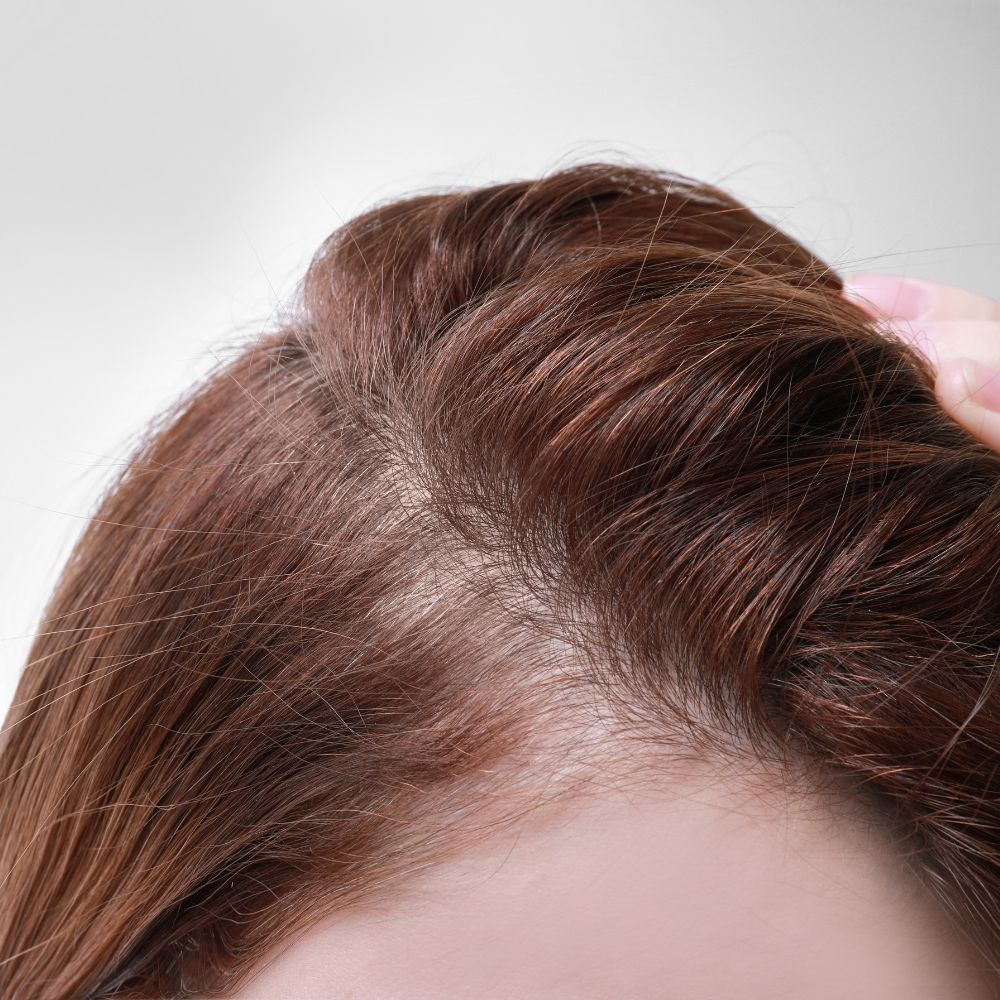
This is often the first noticeable sign, with hair appearing less dense and voluminous over time. Your overall hair may also feel thinner and less full, with the scalp becoming more visible. The part in your hair may also become wider and more visible as hair loss progresses.
Hair Quality Changes
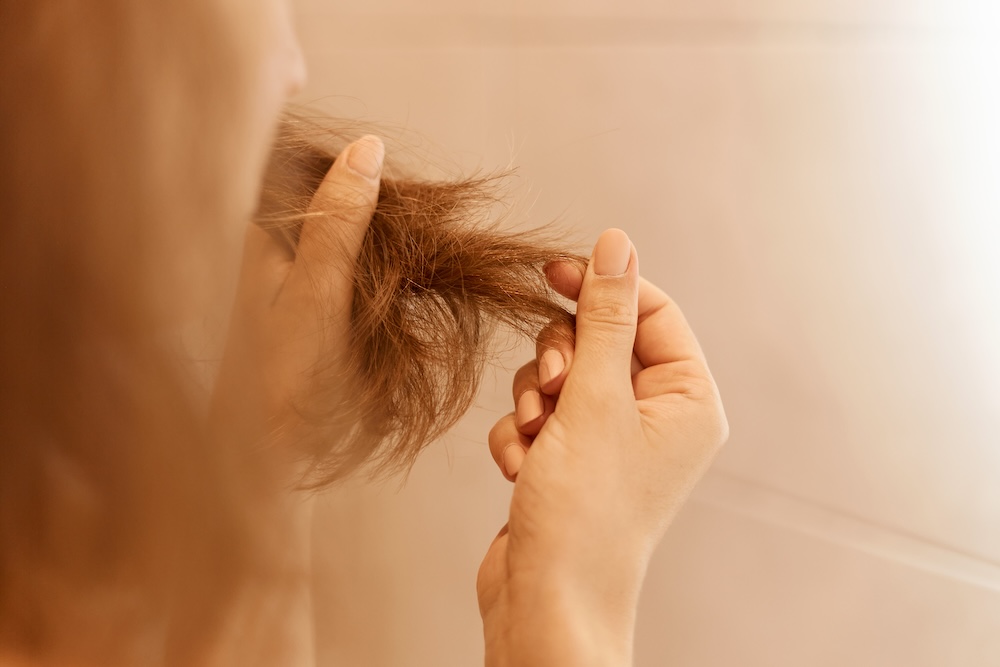
Individual hair strands could start to feel finer and weaker, losing the thick, robust texture they once had. As follicles shrink due to miniaturisation, the new hairs produced could also be shorter and lighter in colour.

Increased Shedding
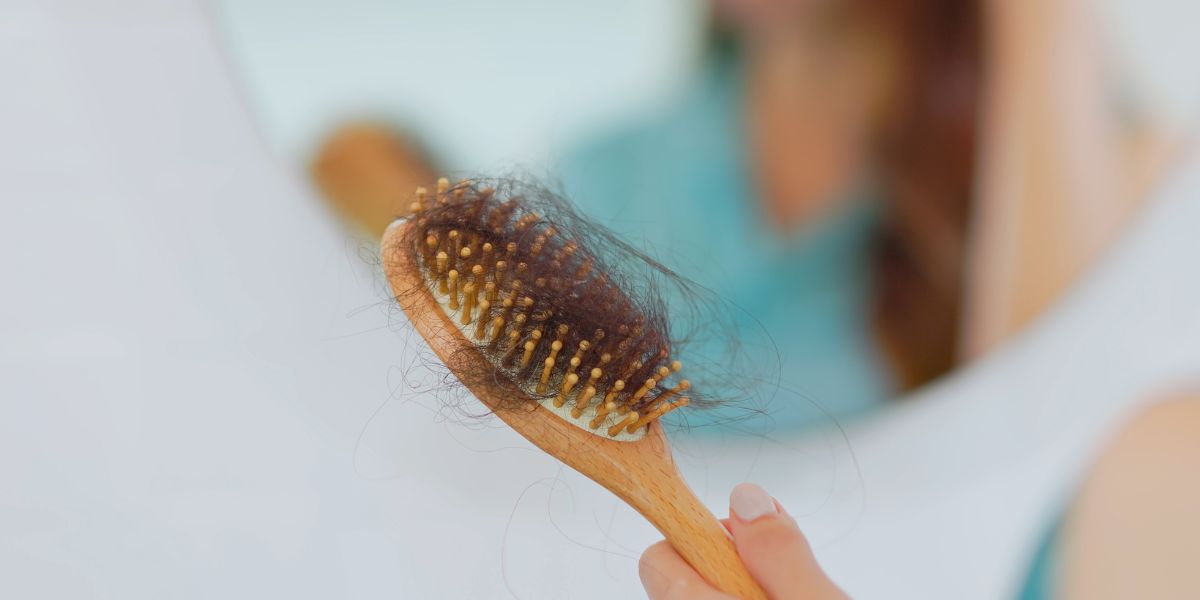
You may notice significantly more hair collecting in the shower drain, on your pillow, or in your brush compared to what you consider a normal amount. This noticeable increase in daily hair fall is a key indicator of a potential underlying issue disrupting the hair cycle.

Scalp Changes
In some forms of hair loss, the scalp may show signs of redness, itching, or tenderness in affected areas. In rare cases, you might also notice small bumps or pustules, indicating inflammation that could be damaging the hair follicles.
The Ludwig Scale Explained
To accurately assess the extent of hair loss, the Ludwig scale is commonly used:
Stage I (Mild Thinning)
This early stage involves minimal thinning, primarily concentrated on the top of the scalp. The hairline remains largely unaffected, but a decrease in overall volume is often noticeable.
Stage II (Moderate Thinning)
Hair loss becomes more pronounced in this stage, with noticeable thinning at the crown and a widening of the central part. Reduced hair volume and coverage make the scalp increasingly visible.
Stage III (Advanced Thinning)
This stage represents severe thinning, with extensive hair loss at the crown, often leaving only a thin layer of hair. The scalp becomes highly visible, and bald spots may develop.
Female Hair Loss Treatment Options in Singapore
Various treatment options are available for female hair loss, ranging from non-invasive therapies to surgical interventions. The choice of treatment will depend on the underlying cause, the severity of hair loss, and individual preferences.
Topical Minoxidil
Minoxidil, a topical medication applied directly to the scalp, works by widening blood vessels and increasing blood flow to the hair follicles. This improved circulation delivers vital nutrients and oxygen, stimulating hair growth and potentially reversing the miniaturisation of hair follicles, which is associated with androgenetic alopecia. As an over-the-counter solution, it’s often recommended as a first-line treatment for women with this common form of hair loss.
Oestrogen-Based Treatment
For women experiencing hair loss due to hormonal imbalances, such as those associated with menopause, oestrogen-based treatments can offer relief. Options like hormone replacement therapy or oral contraceptives help restore hormonal balance, mitigating the impact of decreased oestrogen levels on hair follicles. By addressing the hormonal root cause, these treatments can help slow down hair loss and potentially encourage regrowth.
Hair Transplant
In cases where hair follicles have suffered permanent damage, such as due to traction alopecia or scarring, hair transplant surgery may be considered. This procedure involves carefully harvesting healthy hair follicles from a donor area on the scalp and transplanting them to the affected areas. By relocating these viable follicles, hair transplant surgery can restore hair growth in areas where it has been permanently lost.
Oral Medications
Oral anti-androgen medications, such as Spironolactone or low-dose Finasteride, may be prescribed to women as a form of female hair loss treatment. These medications may work by blocking the effect of male hormones, which could reduce hair follicle miniaturisation. The treatment aims to slow down the rate of hair loss and improve hair density over time.
Platelet-Rich Plasma (PRP) Therapy
PRP therapy involves drawing a small amount of your blood, processing it to concentrate the platelets, and injecting the resulting plasma into the scalp. This highly concentrated platelet solution releases growth factors that aim to stimulate dormant follicles. The treatment is administered with the goal of prolonging the hair’s growth phase and enhancing hair thickness and density.
How V Magic Hair Grow Works
V Magic Hair Grow, an effective hair growth treatment in Singapore, is a doctor-designed approach to hair restoration. It is backed by scientific research and utilises FDA-approved equipment.
This hair loss treatment for women combines the power of Low-Level Laser Therapy (LLLT) with specially formulated hair growth serums containing ingredients like exosomes. Exosomes are tiny vesicles secreted by cells that play a crucial role in cell-to-cell communication and tissue regeneration. These exosomes deliver growth factors and other beneficial molecules to the hair follicles, stimulating their activity and fostering hair growth. Meanwhile, LLLT gently stimulates the scalp, allowing the serum to penetrate deeper and reach the hair follicles with greater efficiency.
This treatment begins with an in-depth hair and scalp analysis and a clarifying wash. A Dermal Electroporation machine will then be used to gently create micro water channels on the scalp before the serum is applied. Lastly, the LED Hair Regrowth Dome will be used to deliver LLLT.
Female Hair Loss Treatment Cost in Singapore
| No. of Sessions | Duration (Per Session) | Treatment Interval | Price |
| Minimum 5 Sessions | 60 Minutes | 1 Week | $28 Nett |
Why Choose V Aesthetics Hair Grow for Female Hair Loss Treatment?
Professional Hair Restoration
Our team consists of experienced professionals dedicated to guiding you towards recovery with compassionate, client-focused care.
Research-Based Treatment Technology
We utilise scientifically backed technologies like LLLT and DEP therapy to ensure effective, non-invasive stimulation and nutrient delivery to your hair follicles.
Personalised Treatment Plans
We move beyond one-size-fits-all by creating bespoke packages tailored specifically to your unique hair condition and individual needs.
Islandwide Convenience
With four easily accessible locations (Novena, Dhoby Ghaut, Jurong East, and City Hall) near MRT stations, professional hair care is always within easy reach across Singapore.
Frequently Asked Questions About Female Hair Loss Treatment
Can hair loss be reversed completely in women?
While achieving complete reversal depends on the cause and severity, improvement and stabilisation are realistic for most women, especially with prompt intervention. Treatments are designed to achieve a normal amount of hair fall and encourage hair regrowth. Combining professional therapy with diet and lifestyle changes offers potential for noticeable recovery.
How many sessions will I need?
The required number of sessions is highly individual, varying with your specific condition and the treatment plan chosen. We generally recommend an initial course of 6 sessions for active stimulation. Following this, maintenance sessions may be advised.
How long does it take to see results from female hair loss treatment?
Most patients may begin to notice a reduction in hair fall and see fine new hairs within 2 to 6 months of consistent treatment. Improved density typically takes between 9 and 12 months to become fully apparent.
Can I combine treatments for better results?
It depends on your specific condition and treatment method. Some female hair loss treatments, such as LLLT, can be paired with DEP therapy to manage hair loss in women. However, other treatments, such as oral medications and hair transplant surgery, are typically not combined with in-clinic procedures in the same way.
Is female hair loss treatment painful?
Most modern female hair loss treatments and postpartum hair fall treatments, particularly non-invasive options such as Low-Level Laser Therapy (LLLT) and DEP therapy, are pain-free. These procedures are designed to be comfortable and relaxing, ensuring a positive experience with minimal discomfort.
Are there any side effects with V Magic Hair Grow?
V Magic Hair Grow is a non-invasive programme prioritising safety and comfort. Side effects are minimal; some clients may experience temporary, mild redness on the scalp immediately after a session due to increased circulation. However, serious side effects are extremely rare, and the treatment involves no downtime.
How much does female hair loss treatment cost in Singapore?
The cost varies widely based on the severity of your hair loss, the technology used (e.g., LLLT, DEP), and the total number of sessions in your chosen plan.
Transparent Pricing,
Personalised for You
Price From $28 Nett.
The cost of our Female Hair Loss Treatment may vary based on your hair condition, scalp health, and the number of sessions recommended. We believe in full transparency — no hidden charges, no hard-selling.
A session starts from just $28 nett, with personalised plans tailored to your needs.
Related Treatments
Hair Loss Treatments

Regain confidence with V Aesthetics Hair Grow’s personalised, non-surgical hair loss treatments. Expert solutions for both men and women in Singapore.
Male Hair Loss Treatment
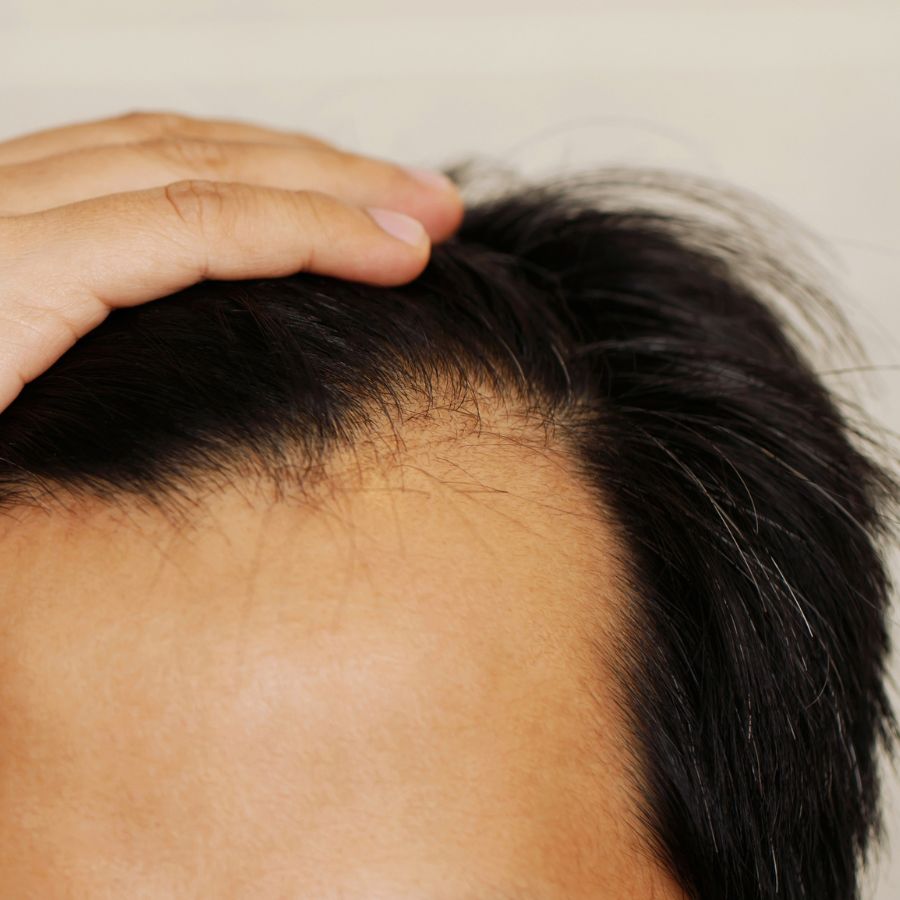
Combat male hair loss in Singapore with personalised treatments at V Aesthetics Hair Grow. Our non-surgical approach promotes natural hair regrowth.
Postpartum Hair Fall Treatment
Feeling overwhelmed by postpartum hair loss? You’re not alone. Learn about the treatments available to manage hair fall and regain your sense of self.