
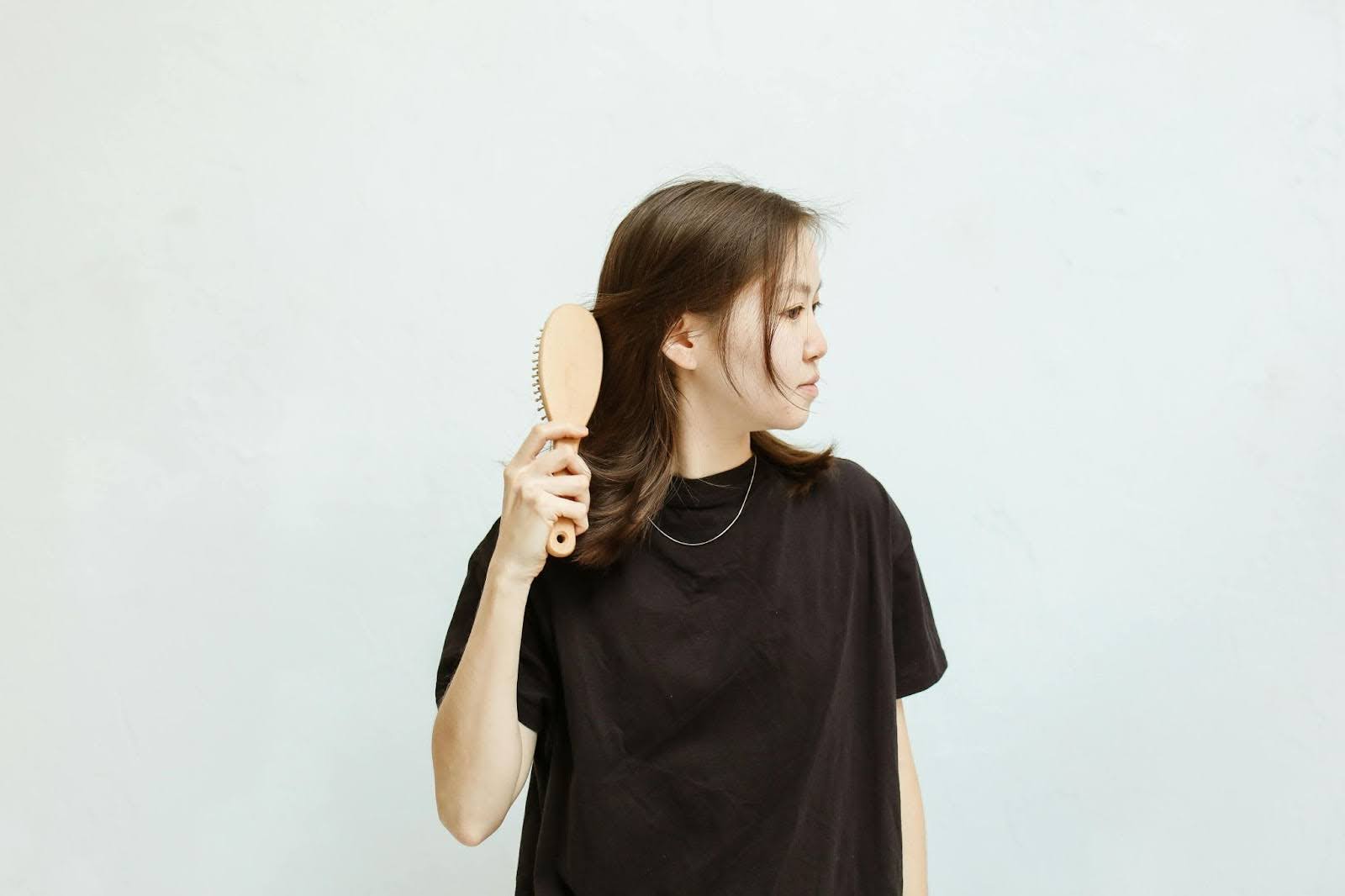
Female hair loss is a prevalent issue among women in Singapore, impacting their emotional well-being and quality of life. A 2019 survey on beauty among Singaporean women revealed that 53% of respondents aged 35 to 44 cited hair loss as their primary hair concern1.
The emotional and psychological impact of hair loss on women can be significant, leading to depression, low self-esteem, a distorted self-image, and decreased social interaction. While hair loss affects both genders, experts concur that women are considerably more likely to experience emotional distress due to societal pressures that equate hair with beauty and femininity2.
However, if you are experiencing hair loss, it’s important to remember that you are not alone and that effective treatments are available to help you address your condition. While the emotional and psychological impact of hair loss can be challenging, understanding the underlying causes and seeking personalised treatments could potentially improve your condition and overall well-being.
What Causes Hair Loss Among Women?
Identifying the cause of the hair loss is important for determining an appropriate treatment strategy. Different factors contribute to hair loss in women, and understanding these factors empowers individuals to seek appropriate management strategies. Common causes of female hair loss include:
- Hormone Imbalances: Fluctuations in hormones, such as those occurring during pregnancy, menopause, or thyroid disorders, could disrupt the growth cycle and lead to hair loss.
- Stress, Diet & Lifestyle: Chronic stress, nutritional deficiencies, and unhealthy lifestyle habits could contribute to hair loss.
- Medical Conditions: Certain conditions, such as autoimmune diseases, scalp infections, and certain medications, could trigger hair loss.
- Genetics: A family history of hair loss could predispose individuals to a type of hair loss (androgenetic alopecia or female pattern hair loss).
Female Hair Loss Treatments
Thankfully, there are various treatments available in Singapore to address the common causes of female hair loss among women of all ages. These range from topicals and medications to other procedures.
Topical Treatments
Topicals are often the first line of defence against hair loss. These are usually applied directly to the scalp to stimulate hair growth or reduce inflammation.
Minoxidil (2% or 5%) [Topical]
Minoxidil is an over-the-counter medication approved for use in Singapore to manage female pattern hair loss. It is available in liquid or foam form and is applied directly to the scalp. You can find Minoxidil in shampoos or hair treatments at most pharmacies in Singapore.
Although the exact mechanism is unknown, Minoxidil is thought to work by extending the anagen (growth) phase of the hair cycle, stimulating hair follicles to produce thicker, longer hairs. It also potentially promotes blood flow to the scalp, which may help deliver nutrients to hair follicles.
Both the 2% and 5% concentrations of Minoxidil have been shown to be effective in increasing hair count and promoting hair growth in women with female pattern hair loss. However, clinical studies suggest that the 5% concentration may offer greater efficacy in terms of hair regrowth3. That being said, individual responses to Minoxidil can vary.
- Suitable For: Women with female-pattern hair loss (androgenetic alopecia).
- Application: Apply to the affected area of the scalp as per the product’s instructions.
- Prescription Required?: No
Corticosteroid Creams [Topical]
Corticosteroid creams are anti-inflammatory medications that can be used to address hair loss in women caused by inflammatory conditions such as alopecia areata. The National Institutes of Health (NIH) study found that topical steroids were more effective than other treatments like tretinoin and dithranol paste in managing alopecia areata, with 70% of patients in the topical steroid group showing positive responses4.
Corticosteroid creams work by suppressing the immune system and reducing inflammation in the hair follicles. In Singapore, stronger corticosteroid creams usually require a prescription from a doctor.
- Suitable For: Women experiencing hair loss caused by inflammatory scalp conditions like alopecia areata.
- Application: Apply to the affected area as directed by your doctor.
- Prescription Required?: Yes, for stronger formulations.
Oral Medications
Oral medications may be used to address hormonal imbalances or underlying deficiencies contributing to hair loss in women. These medications work systemically to promote hair growth and potentially improve hair health.
Spironolactone
Spironolactone is an oral medication primarily used to treat high blood pressure and fluid retention. However, it also has anti-androgen properties, making it a potential treatment option for managing female pattern hair loss. Locally, Spironolactone requires a prescription from a doctor.
Spironolactone works by blocking the effects of androgens (male hormones) on hair follicles, which can help reduce hair loss and promote hair growth. A 2015 study showed promising results, with nearly 75% of women experiencing improvements in their hair loss after taking spironolactone5. However, it’s important to note that it can require some patience, as it may take up to a year to see the full effects of this medication6.
- Suitable For: Women with female-pattern hair loss (androgenetic alopecia) caused by an overproduction of androgens.
- Application: Taken orally, usually once or twice daily, as prescribed by your doctor.
- Prescription Required?: Yes
Oral Minoxidil
While typically used topically, Minoxidil can also be taken orally in tablet form for hair loss. Oral Minoxidil is a prescription drug in Singapore and is often considered for individuals who have not responded well to topical Minoxidil or who prefer oral medication.
- Suitable For: Women with female-pattern hair loss (androgenetic alopecia) who have not responded well to topical treatments or prefer oral medication.
- Application: Taken orally, as prescribed by your doctor.
- Prescription Required?: Yes
Iron and Vitamin Supplements
Iron deficiency and certain vitamin deficiencies, such as vitamin D and biotin deficiency, could contribute to hair loss. Therefore, addressing these deficiencies with supplements could help improve hair growth and overall hair health. Iron and vitamin supplements are readily available over-the-counter at most local pharmacies.
- Suitable For: Women experiencing hair loss caused by iron deficiency or vitamin deficiencies.
- Application: Taken orally, as directed on the product label or as prescribed by your doctor.
- Prescription Required?: No
Non-Invasive Low-Level Laser Therapy (LLLT)
Low-level laser therapy (LLLT) is a non-invasive hair growth treatment that utilises low-powered lasers or light-emitting diodes (LEDs) to stimulate hair follicles. It is believed to work by encouraging blood flow to the scalp and potentially promoting cellular activity within the hair follicles, encouraging hair growth.
Several studies have shown the efficacy of LLLT in addressing both male and female pattern hair loss. Research from as recently as 2013 has shown that LLLT can effectively stimulate hair growth in both men and women dealing with pattern hair loss7.
LLLT could be used as an adjunctive therapy alongside other hair loss treatments like Minoxidil. It’s generally considered safe for most people, but it’s essential to consult with professionals to determine if it’s the right method for you.
- Suitable For: LLLT is suitable for both men and women experiencing hair loss due to androgenetic alopecia (male or female pattern hair loss). It may also be beneficial for individuals with other types of hair loss, such as alopecia areata or telogen effluvium.
Hair Transplant Surgery
A hair transplant is a surgical procedure that is done by transplanting hair follicles from one part of the body to the area experiencing hair loss. This may be a viable option for women with permanent hair loss, such as that caused by androgenetic alopecia or scarring. Different techniques are used depending on the extent of hair loss and the patient’s individual needs.
- Follicular Unit Extraction (FUE): FUE involves extracting individual hair follicles from the donor area and transplanting them to the recipient site. This technique leaves minimal scarring and is often preferred for smaller areas of hair loss.
- Follicular Unit Transplantation (FUT): This involves removing a strip of scalp from the donor area, dissecting it into individual follicular units, and transplanting them to the recipient site. FUT can cover larger areas of hair loss but leaves a linear scar in the donor area.

Lifestyle Changes
Alongside medical treatments, incorporating certain lifestyle changes could help in managing hair loss and potentially promoting hair health. These changes often involve addressing nutritional deficiencies, improving hair care practices, and managing stress levels.
Diet & Nutrition
A nutritious and balanced diet forms the foundation of healthy hair growth. Ensure your diet is rich in biotin (found in eggs and nuts), zinc (found in meat and legumes), iron (found in red meat and spinach), and protein (found in meat, fish, and beans). These nutrients support hair follicle function and promote healthy hair growth for women of all ages. If you suspect deficiencies, you can also consider supplements like omega-3 fatty acids and multivitamins specifically formulated for hair loss.
Furthermore, staying hydrated in Singapore’s humid climate is important for a healthy scalp and preventing dryness, which can contribute to hair loss.
Proper Hair Care
Gentle hair care practices can minimise hair loss and breakage. For example, using sulphate-free shampoos may be particularly beneficial in Singapore’s tropical weather to avoid stripping the hair of its natural oils.
Similarly, it may be beneficial to minimise the use of heat styling tools and minimise wearing tight hairstyles that pull on the hair and scalp. Regular scalp massages could also improve blood circulation to the hair follicles, promoting hair growth.
Lastly, for women with long hair, it is wise to consider using a wide-toothed comb to prevent tangles and breakage and opt for hairstyles that minimise stress on the hair, such as loose braids or buns.
Protection for Hair
Protecting your hair from environmental damage is important for maintaining its health. Hence, you should shield your hair from intense UV rays, which could weaken hair and cause breakage, by wearing hats or using leave-in products with UV protection. After swimming, it is also important to rinse your hair thoroughly to remove chlorine, which could dry out and damage hair.
Stress Management
Chronic stress could disrupt the hair growth cycle and contribute to hair loss. Hence, it may be beneficial to engage in stress management techniques tailored for women in Singapore, such as mindfulness practices, yoga, regular exercise, and sufficient sleep. These could help reduce stress levels and promote overall well-being, contributing to healthier hair.
Choosing the Right Treatment
Selecting the right hair loss treatment depends on several factors, including the underlying cause, your individual preferences, and your budget. Hence, it’s essential to consult a qualified dermatologist or trichologist who can diagnose the cause of female hair loss and recommend the most appropriate treatment plan.
Empowering Your Hair Journey
It’s important to remember that female hair loss is often manageable with the right approach. If you’re concerned about hair loss, you could consider exploring options like V Aesthetics Hair Grow. These clinics offer science-backed hair programmes that address various causes of hair loss and provide management methods such as post-partum hair loss treatments.
By taking proactive steps to care for your hair, maintaining a healthy lifestyle, and seeking professional guidance when needed, you can regain confidence and enjoy healthy, vibrant hair.
References
- Leading hair concerns of women in Singapore in 2019, by age group. Statista. Accessed November 2024. https://www.statista.com/statistics/1099392/singapore-leading-hair-concerns-of-women-between-35-to-44-years/
- Cherney K. Hair loss in women: Causes, treatment, and prevention. Medical News Today. April 2015. Accessed November 27, 2024. https://www.medicalnewstoday.com/articles/292492#The-severe-emotional-impact-of-hair-loss-for-women
- Cash TF. The psychosocial consequences of androgenetic alopecia: a review of the research. J Am Acad Dermatol. 2004;51(4):605-610.
- Freyschmidt-Paul P, Hoffmann R, Happle R, McElwee KJ. A randomized, controlled, observer-blinded study comparing the efficacy and safety of topical tretinoin, 0.05% cream vs. topical corticosteroid, 0.1% cream vs. dithranol 0.5% cream in the treatment of scalp psoriasis. Eur J Dermatol. 2010;20(3):358-363.
- Sinclair R, Wewerinke M, Jolley D. Treatment of female pattern hair loss with oral antiandrogens. J Am Acad Dermatol. 2015;73(4):641-651.
- Spironolactone for hair loss: What to know. Healthline. August 2018. Accessed November 27, 2024. https://www.healthline.com/health/spironolactone-for-hair-loss
- Suchonwanit P, Thammarucha S, Leerunyakul K. Low-level laser therapy for hair loss. J Cosmet Dermatol. 2013;12(4):253-262.
Leave a Reply